What is open in Munich on a Sunday?
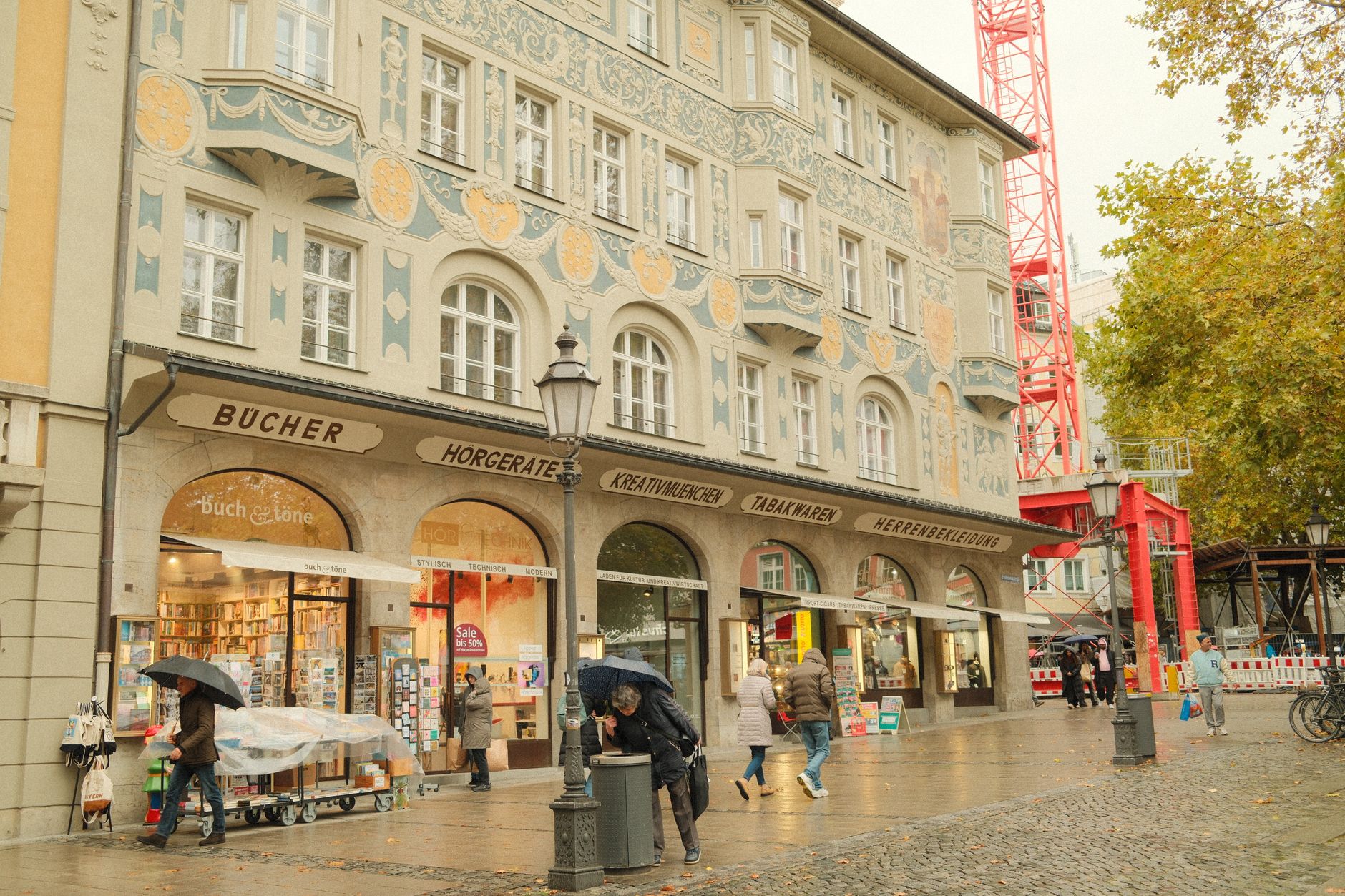
Very little retail. Bavaria’s shop-closing law keeps ordinary stores shut on Sundays, with narrow exceptions: Hauptbahnhof and airport shops under travel-retail rules, petrol stations, and a few bakeries for a short morning window. Museums, churches, and beer gardens run as normal. Markets, including the Viktualienmarkt’s stalls, do not.
Why is so much closed in the first place?
Germany regulates shop opening hours at the state level, not nationally. Bavaria’s version of this law — the Ladenschlussgesetz — is one of the stricter ones in the country. It treats Sunday trading as the exception, not the default, and it names the categories allowed to deviate.
The reasoning and the exact text of the law are a separate subject. A fuller explanation of the mechanism, and why it survives in a modern retail economy, sits in a dedicated piece on why everything closes on Sunday in Munich. This article focuses on the exceptions that actually matter to a visitor.
Which specific shops are legally allowed to open on Sunday?
Bavarian law carves out a short, specific list of categories. These are not local customs or informal workarounds. They are written into the statute, published on Bavaria’s official legal portal, gesetze-bayern.de.
- Train station retail. Shops inside Munich Hauptbahnhof, the city’s main railway station in Ludwigsvorstadt-Isarvorstadt (Bezirk 2), operate under travel-retail provisions aimed at passengers. Deutsche Bahn, which manages the station, lists current tenants and hours on its own site, bahn.de.
- Airport retail. The same logic applies at Munich Airport (Flughafen München). Shops in the terminals serve travelers, not local Sunday shopping, and are exempt on that basis. Munich Airport publishes its own terminal directory at munich-airport.de.
- Petrol stations. Fuel stations (Tankstellen) are permitted to sell a limited range of goods — snacks, basic groceries, newspapers — alongside fuel, seven days a week.
- Bakeries, for a few morning hours only. A bakery exemption lets some bakeries open briefly on Sunday mornings, typically to sell fresh bread and pastries. The permitted window is short and set by the same law, not by individual bakeries, so hours vary and should not be assumed.
Outside these categories, a closed shutter on a Sunday is simply the law working as intended, not an isolated oversight.
Is the Viktualienmarkt open on Sunday?
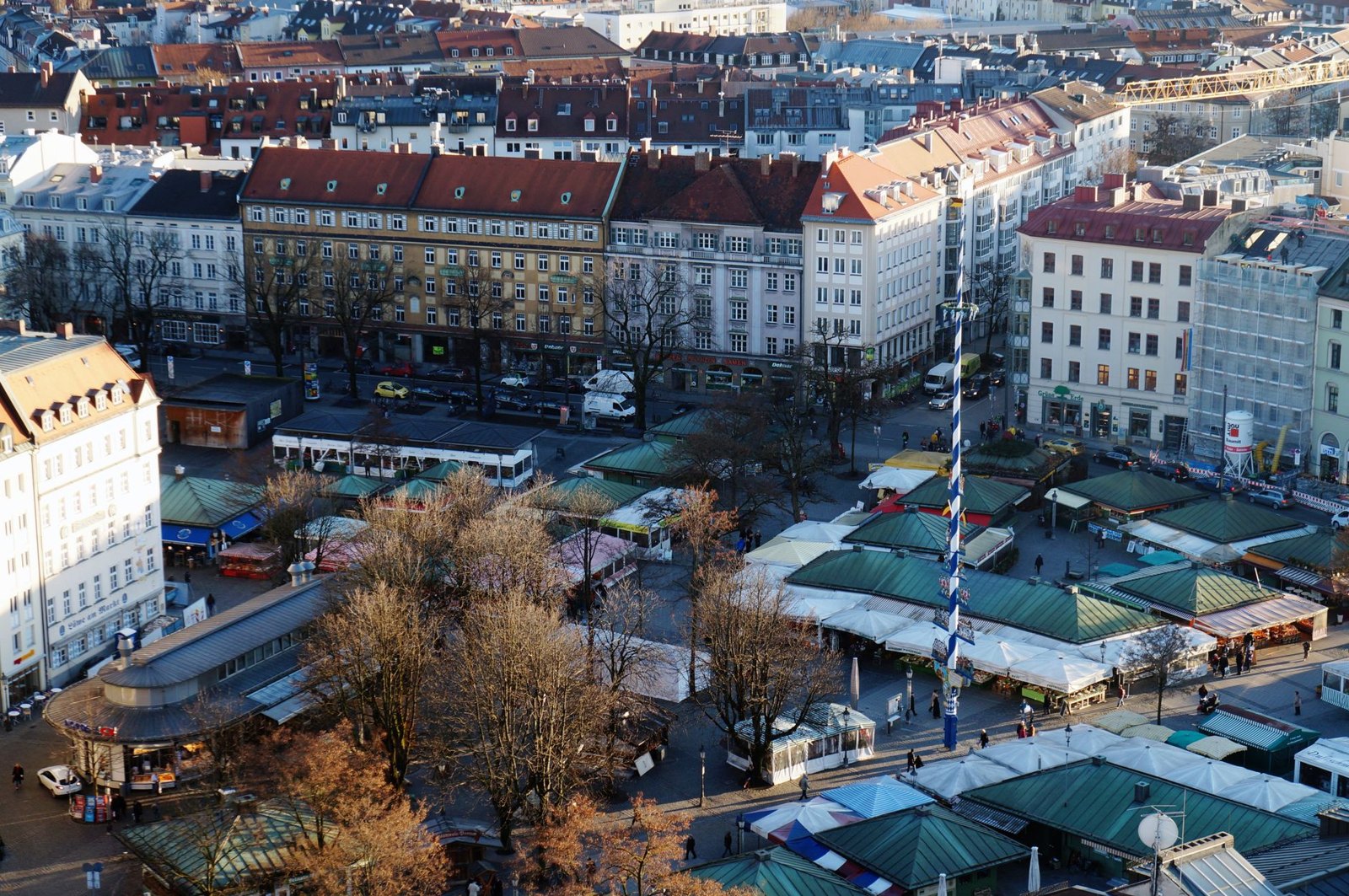
No. The market stalls are closed. Only the beer garden at its center operates on a Sunday, and that trips up a lot of visitors.
The Viktualienmarkt, in the Altstadt-Lehel district (Bezirk 1) next to Marienplatz, is a permanent food market of roughly a hundred stalls selling produce, meat, cheese, and prepared food. It is not a single shop and does not fall under any travel-retail or petrol-station exception. It closes on Sunday along with everything else covered by the Ladenschlussgesetz.
What stays open is the chestnut-tree beer garden at the market’s core, which functions as a beer garden rather than as retail and is covered separately by hospitality rules. A visitor expecting to browse produce stalls on a Sunday will find them shuttered; a visitor wanting a beer and a pretzel at the same spot generally will not be disappointed. The distinction between a market stall and a beer garden, on this one site, is the whole answer.
What about museums, churches, and beer gardens more broadly?
These three categories run close to a normal day, because they are not covered by the shop-closing law at all. It regulates retail trade, not cultural institutions or hospitality.
Munich’s state and city museums — the Alte Pinakothek, the Deutsches Museum, the Bayerisches Nationalmuseum among them — generally open on Sunday, often with reduced hours compared to weekdays. Several also use Sunday for a reduced admission rate; a separate article covers which Munich museums actually qualify for the one-euro Sunday rate, since not all of them do and the rule varies by institution. A broader survey of the collections themselves sits in the Munich guide hub, under its museums and landmarks section.
Churches, including the Frauenkirche and St. Peter’s, hold Sunday services and are typically open to visitors outside service times, though access during Mass is restricted as a matter of practice, not law. Beer gardens, including those attached to breweries, run their usual schedule, weather permitting; the pattern of how Munich’s beer gardens operate across the seasons is covered in the beer gardens and breweries hub.
Does Sunday change how transport and planning should work?
Public transport runs on a Sunday schedule rather than closing, which usually means slightly reduced frequency rather than no service. The MVV zone system that prices tickets by distance does not change on Sundays; it works the same seven days a week, and how its zones are drawn is explained in a piece on the MVV zone system and where Zone M ends.
For a visitor building a one-day itinerary around closures, the practical shape is this: assume shops are shut, confirm any specific museum’s Sunday hours directly with that museum, and treat a petrol station or a station kiosk as the fallback for anything urgent. Wider planning questions — luggage, transit cards, what differs by season — sit in the practical information hub and the planning and practicalities archive.
Access Munich is an independent guide written from published, checkable sources. We have not visited the places described here and we do not publish personal recommendations or invented ‘local favorites’ — where something is singled out as notable, we say who says so. Opening times, fares, closures and prices change at short notice, so treat everything here as a starting point and confirm with the museum, operator or venue directly before building a day around it. We give no advice on visas, insurance, health or safety; use your own government’s official guidance for those.