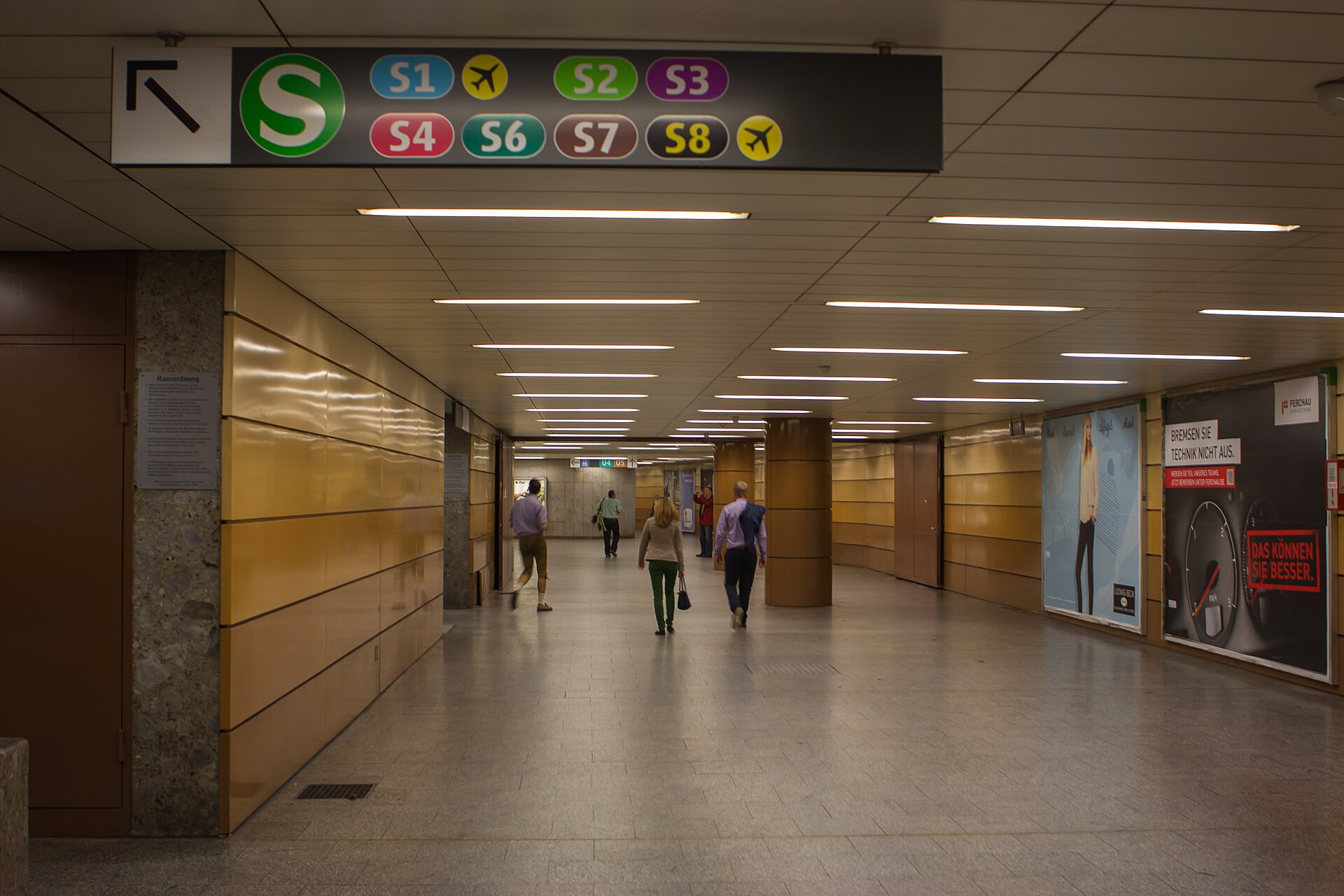
The MVV no longer runs on rings. Since December 2019 the network has used a zone model: Zone M covers Munich and a handful of neighboring towns, surrounded by Zones 1 through 6. Fares depend on how many zones a trip crosses. Zone M’s outer edge rarely matches the city’s own administrative boundary — it cuts through some lines a stop or two early, and on one line it stretches well past the city limit.
How did the old MVV ring system work?
Until December 2019, the Münchner Verkehrs- und Tarifverbund (MVV, Munich’s transport and fare association) organized its region into 16 concentric fare rings, or Ringe. These were bundled into four tariff colors — white, yellow, red and green — and a ticket’s price rose with the number of rings it crossed.
Riders found it hard to read. A ring’s edge often fell mid-street, invisible on the ground and barely legible on the printed network map. MVV replaced the whole structure with the current zone system, according to the operator’s own account of the reform on its website, which every reader can check directly at mvv-muenchen.de.
How does the current MVV zone system work?
Zone M sits at the center, covering Munich and a small ring of adjoining communities. Around it are Zones 1 through 6, arranged concentrically outward toward the wider region — as far as the airport, Dachau, Starnberg and beyond. A ticket’s price is set by the number of zones it touches, not by the number of stations or kilometers traveled.
The same ticket works across all modes inside those zones: S-Bahn, U-Bahn, tram and bus. Fares, weekly caps and the exact zone count for any given trip change from time to time, so treat any figure here as a placeholder and confirm current pricing on the MVV website before buying. What matters for planning is the shape of the system, not this month’s number.
Where does Zone M actually end?
This is the part MVV’s own map answers only in small print, as a colored line on a diagram. On the ground, it means a specific station. Below are the boundary points on the main lines, based on MVV’s published zone map. Confirm any of these before a trip that matters, since boundaries have shifted before.
- U6, northbound toward Garching: stays inside Zone M for its entire length, all the way to the terminus at Garching-Forschungszentrum — even though Garching itself is a separate town in the Landkreis München (the county surrounding the city), not part of Munich.
- U6, southbound toward Martinsried: Klinikum Großhadern, in the Hadern borough (Stadtbezirk 20), is the last stop inside Zone M. Martinsried, one stop further, sits in Zone 1.
- S1, toward Freising and the airport: Fasanerie, in the Feldmoching-Hasenbergl borough (Stadtbezirk 24), is the last Zone M stop. Lohhof, in Unterschleissheim, is Zone 1.
- S2, toward Petershausen: Allach, in the Allach-Untermenzing borough (Stadtbezirk 23), marks the edge of Zone M. Karlsfeld, in the Dachau district, is the first Zone 1 stop.
- S2, toward Erding: Riem, in the Trudering-Riem borough (Stadtbezirk 15), is the last Zone M station. Feldkirchen follows, in Zone 1.
- S3, toward Mammendorf: Aubing, in the Aubing-Lochhausen-Langwied borough (Stadtbezirk 22), sits in Zone M. Puchheim, in the Fürstenfeldbruck district, does not.
- S3/S7, toward Holzkirchen and Wolfratshausen: Solln, in the large southern borough of Thalkirchen-Obersendling-Forstenried-Fürstenried-Solln (Stadtbezirk 19), is the last Zone M stop. Pullach, just beyond it, is Zone 1.
Most other U-Bahn lines never leave Zone M at all. U1, U2, U3, U4 and U5 begin and end within the city, so the zone question simply does not arise on them.
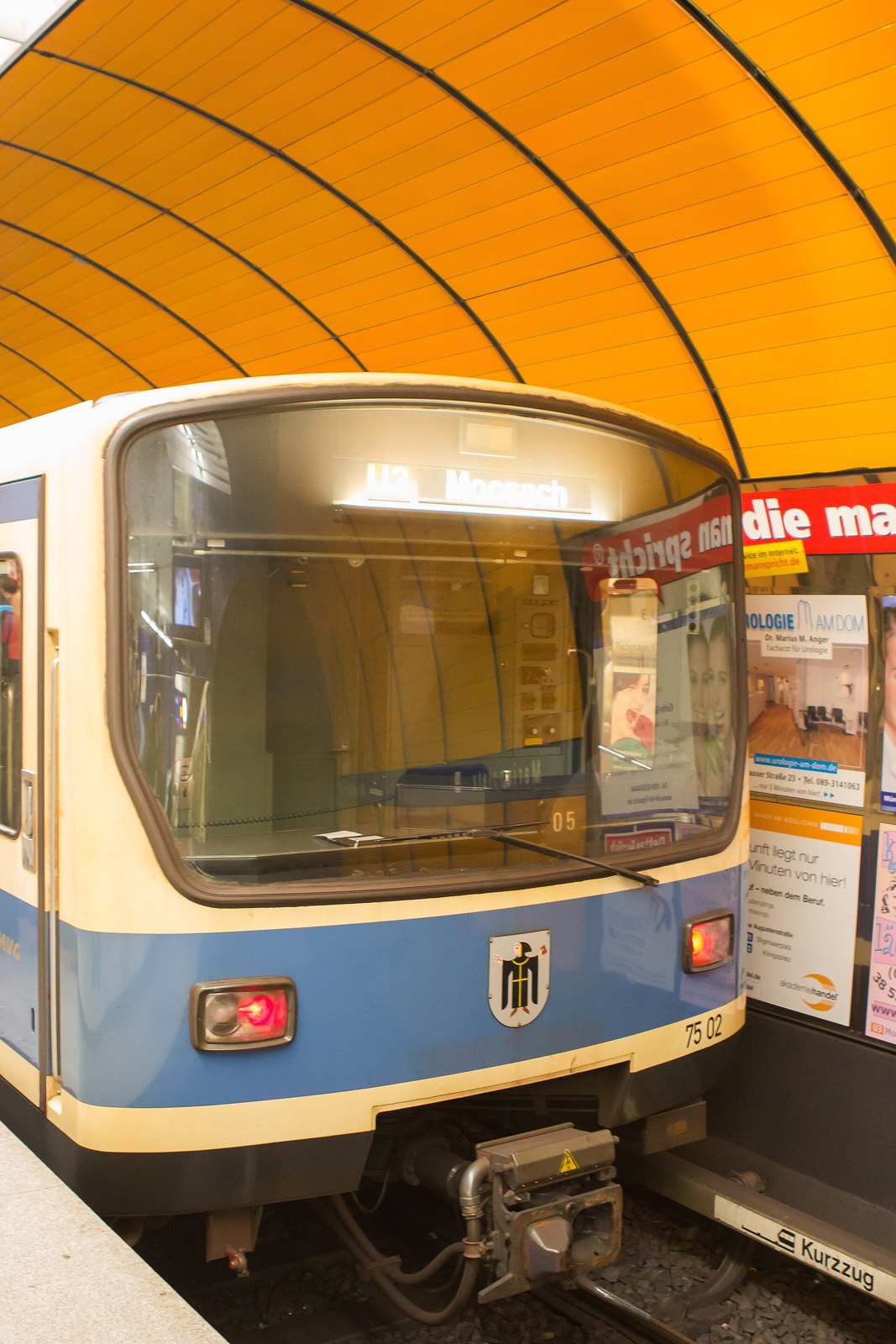

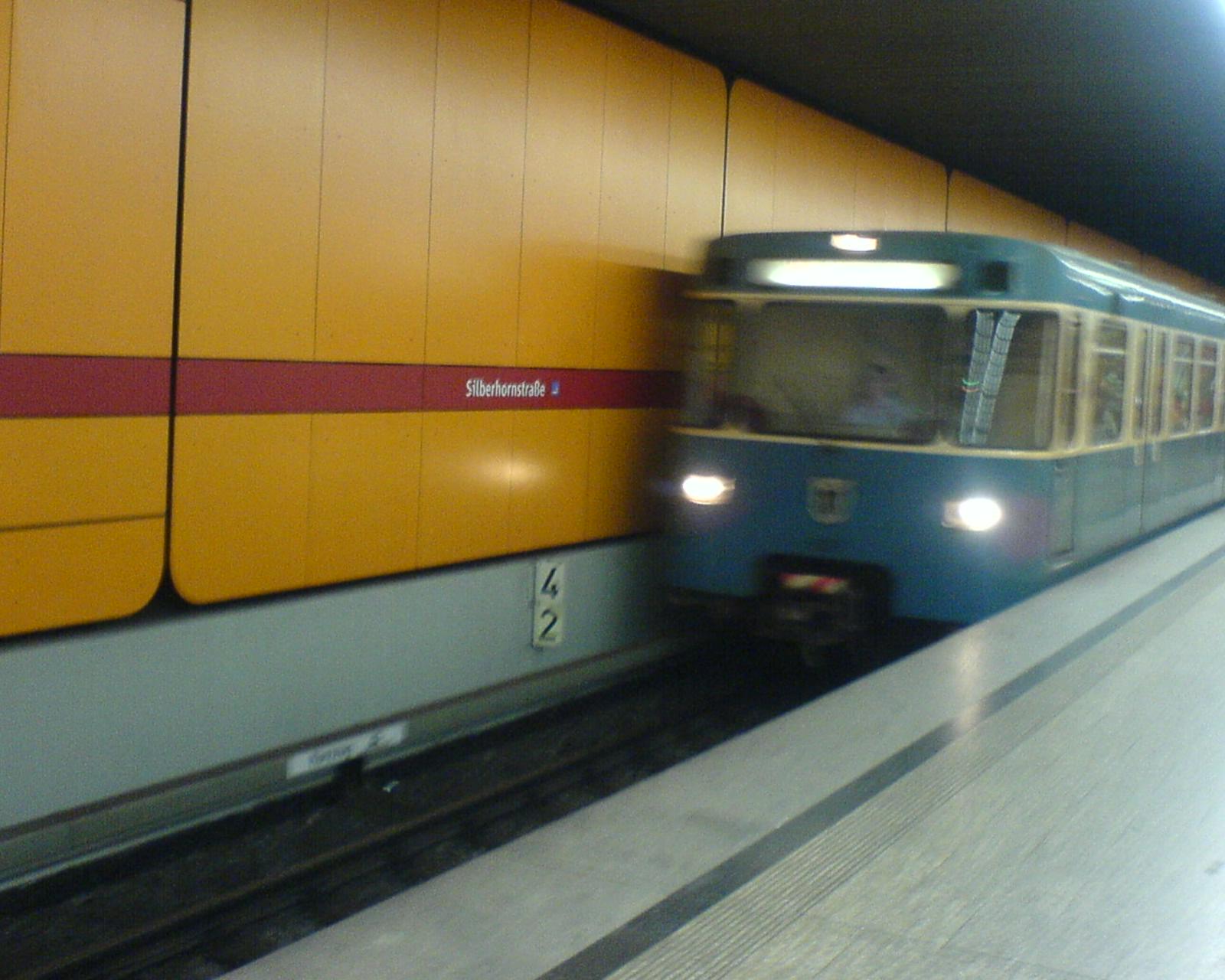

Does Zone M match Munich’s own city limit?
No. It comes close, but the two lines were drawn for different reasons. The city boundary is an administrative fact, recorded by the city government and shown on maps published by muenchen.de. Zone M was drawn for commuting patterns.
Garching is the clearest case. It is a separate town, outside Munich, home to the Technical University of Munich’s science campus. MVV placed all three of its U6 stations — Garching-Hochbrück, Garching and Garching-Forschungszentrum — inside Zone M anyway. The reform was widely reported at the time as a direct response to complaints from students and staff commuting daily between the city and the campus.
Elsewhere the boundary is tighter than the city edge, not looser. Martinsried, Pullach, Puchheim, Karlsfeld, Feldkirchen and Lohhof are all outside Zone M despite being one S-Bahn or U-Bahn stop from a Munich station that is inside it. There is no single rule. Each line was drawn on its own case.
Which ticket should a commuter near the edge actually buy?
If every stop of a regular commute sits inside Zone M, a single-zone pass covers it, and nothing about crossing into a neighboring town applies. If the commute runs from, say, Pullach into the city center, it crosses into Zone M from Zone 1, and the ticket needs to cover both.
Since 2023, Germany’s nationwide Deutschlandticket has offered a simpler route around all of this. It is valid across the entire MVV network regardless of how many zones a trip crosses, at a flat monthly rate set nationally rather than by MVV itself. Details and current terms sit with the ticket’s own program, not with MVV, and are worth checking directly at deutschlandticket.de.
For anyone not using that ticket, MVV’s own journey planner calculates the zone count automatically for any given trip, which avoids the guesswork the printed map invites. The operator of the U-Bahn network itself, MVG, publishes the current line map at mvg.de, useful for checking a specific station against a specific line before relying on any list, including this one.
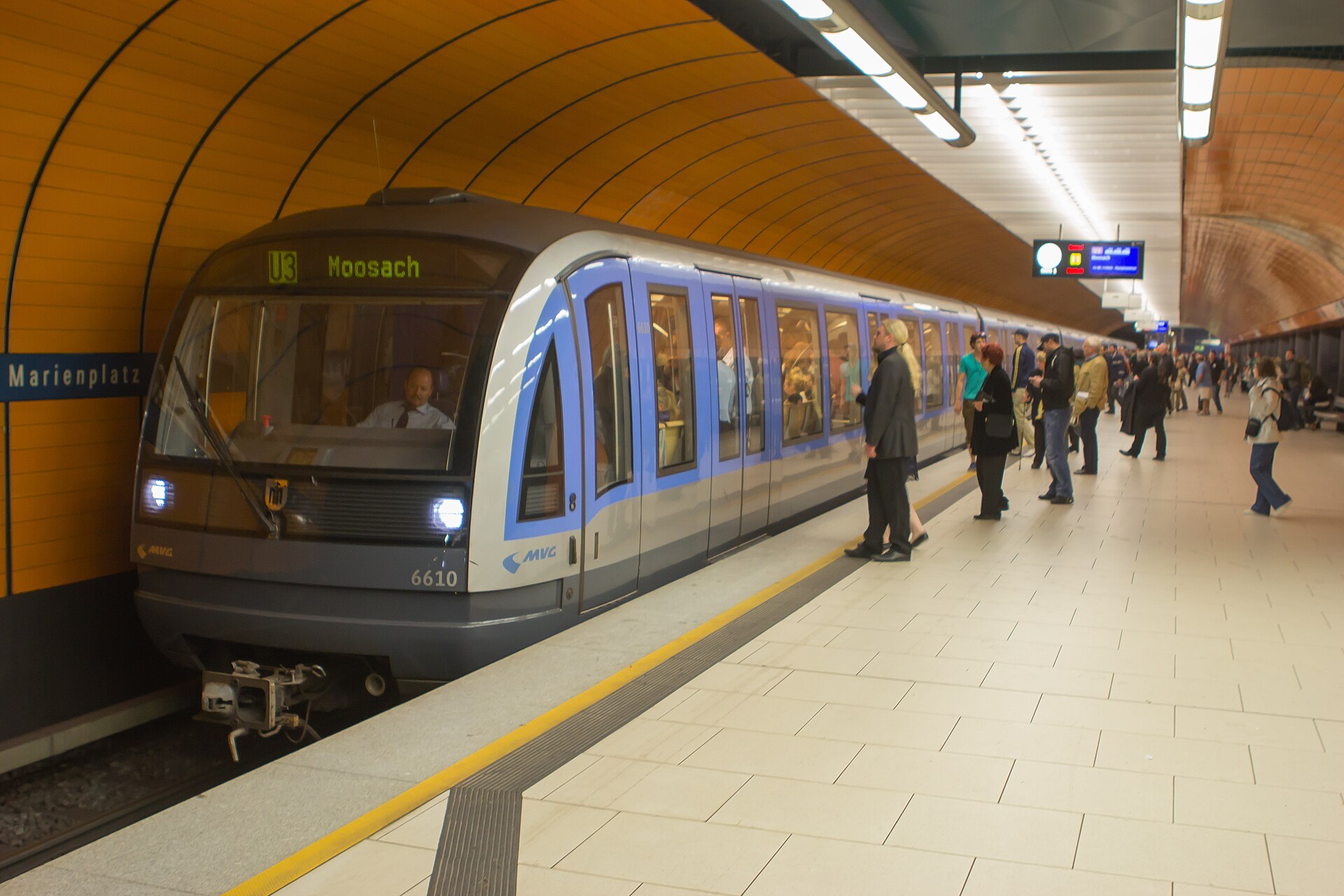

Why does the boundary matter for someone actually moving here?
An apartment a few minutes past Munich’s edge — in Martinsried, Puchheim or Unterschleissheim — can look identical to one just inside it. The fare difference is real but modest under most tickets, and the Deutschlandticket erases it entirely for its holders. The bigger practical questions around moving to Munich, from registering an address to understanding a rental contract, sit in the site’s own guide to moving to Munich and registering a new address.
For day-to-day questions about routes, tickets and getting around once settled, the broader hub on getting around Munich covers the mechanics beyond zones alone. Anyone mapping neighborhoods against transport lines before choosing where to live may also find it useful to cross-reference the site’s guide to Munich’s neighborhoods and landmarks.
One seasonal note worth flagging: during Oktoberfest, the U-Bahn and tram lines serving the Theresienwiese grounds sit well inside Zone M, so the zone system itself is not what determines cost or crowding on those routes — timing is. The site’s guide to Munich’s beer culture and Oktoberfest covers that pattern in more detail.
The zone edge is a fixed line on a fare map. Where someone actually lives, and what that costs to reach day to day, is a separate question — one worth checking against MVV’s own current map rather than any single list, this one included.
Access Munich is an independent guide written from published, checkable sources. We have not visited the places described here and we do not publish personal recommendations or invented ‘local favorites’ — where something is singled out as notable, we say who says so. Opening times, fares, closures and prices change at short notice, so treat everything here as a starting point and confirm with the museum, operator or venue directly before building a day around it. We give no advice on visas, insurance, health or safety; use your own government’s official guidance for those.
Featured image: Photo by Poudou99, source, CC BY-SA 4.0

What it costs, as of September 2026
Fares are the part of this that changes, and they change every January. Two figures are worth knowing before you work anything else out:
- The Deutschlandticket costs €63 a month as of 1 January 2026. It covers all local and regional transport across Germany — every MVV zone included, plus regional trains beyond them. For anyone travelling more than a few times a week it removes the zone question entirely.
- Single and day tickets are priced by how many zones you cross, so a trip inside Zone M costs the same whether it is two stops or twenty. The airport sits outside Zone M, which is why an airport journey costs several times an inner-city one.
We deliberately do not print the current single and day-ticket prices here. MVV revises them each January and does not publish a stable fare table we can cite; a figure that is three months out of date is worse than no figure. Check the current price in the MVGO or MVV app, or at any machine, before you budget. The Deutschlandticket price above is the national rate set for 2026 and was checked on 3 September 2026.